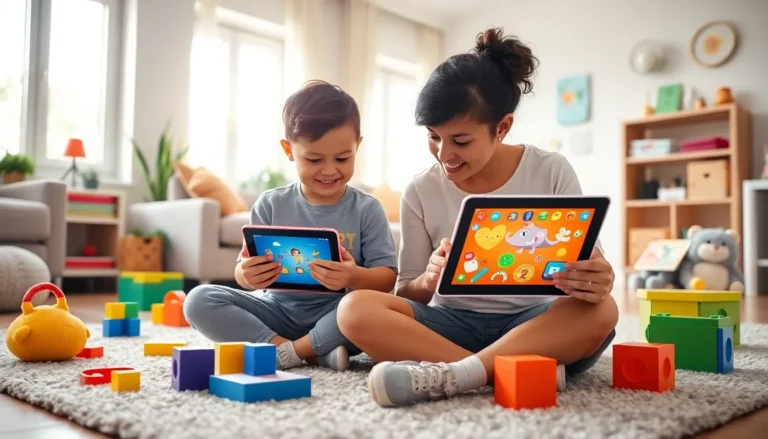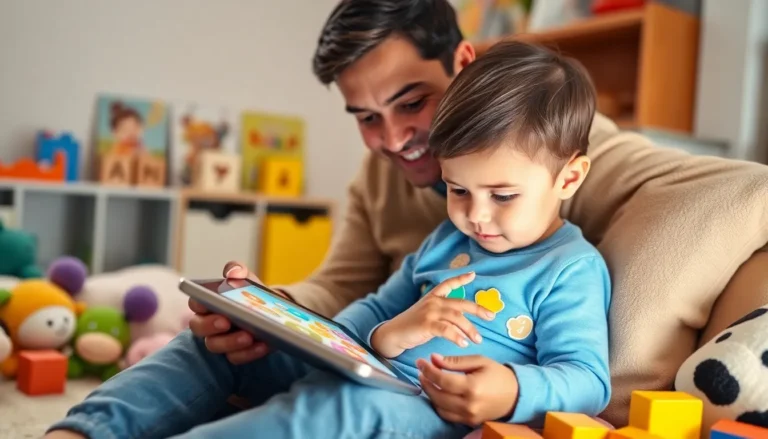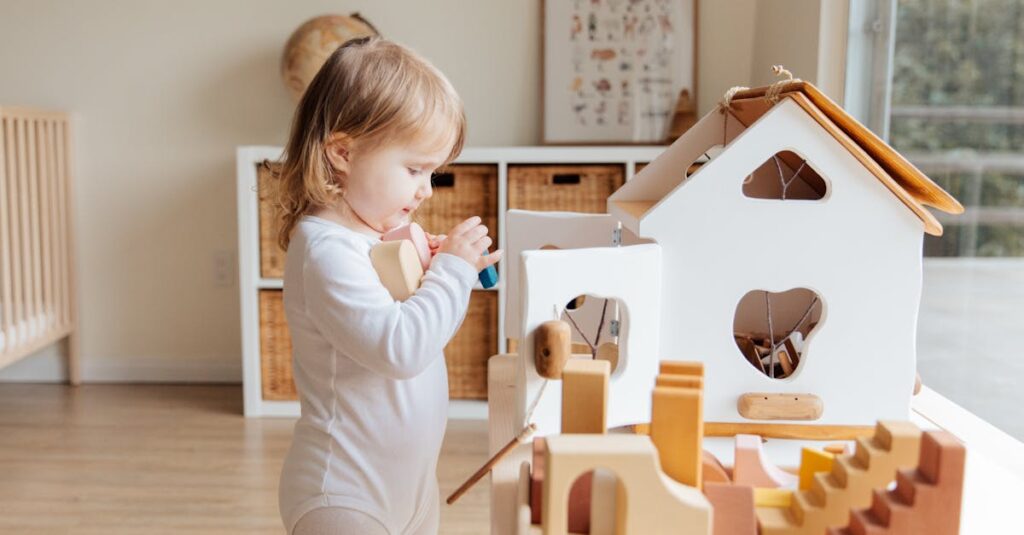
In a world where tiny hands are on a quest for knowledge, baby educational toys are the ultimate sidekicks. These playful gadgets don’t just entertain; they ignite curiosity and spark learning from the very first giggle. Who knew that a colorful stacking ring could be a mini-MIT for your little one?
Table of Contents
ToggleOverview of Baby Educational Toys
Baby educational toys play a crucial role in early development. These toys promote cognitive skills, motor skills, and social interaction among infants and toddlers. Stacking rings encourage hand-eye coordination, while shape sorters stimulate problem-solving skills.
Many toys incorporate bright colors and varied textures, capturing a baby’s attention effectively. Multi-sensory experiences enhance learning as babies explore different materials and sounds. From plush toys with crinkly materials to wooden blocks with bright hues, there’s a wide variety to choose from.
Parents can find toys designed for specific age groups to ensure appropriate developmental challenges. Toys for younger infants often emphasize sensory exploration, while options for older babies focus on fine motor skills and cognitive tasks. Interactive toys, such as musical instruments, engage children and foster creativity.
Research shows that playtime serves as an educational opportunity. Through play, babies learn cause and effect, understand spatial relationships, and develop language skills. Educational toys align with these learning experiences by providing hands-on interactions.
Safety remains a top priority when selecting baby educational toys. Products must meet safety standards to ensure they are free from harmful materials and small parts. Certifications from organizations, such as the Consumer Product Safety Commission, help parents make informed choices.
Exploration with educational toys doesn’t just entertain. It builds foundational skills that set the stage for future learning. The right toys nurture curiosity and inspire a love for learning, creating a positive impact on overall development.
Types of Baby Educational Toys
Various types of baby educational toys foster different aspects of learning and development. Selecting the right toys can enhance a child’s growth in cognitive, sensory, and creative areas.
Sensory Toys
Sensory toys engage a baby’s senses, promoting exploration and learning through touch, sight, and sound. Textured plush toys stimulate tactile experiences, while colorful rattles grab visual attention. Crinkly materials generate sounds that capture curiosity, encouraging babies to manipulate and interact. These toys spark creativity in young minds, helping them connect sounds with actions. Infants benefit from sensory toys as they learn about cause and effect through playful interaction. Each sensory experience offers opportunities for language development, too.
Building Blocks
Building blocks serve as a classic educational tool, suitable for developing fine motor skills and spatial awareness. Wooden and soft plastic blocks come in various shapes and colors, enhancing visual sorting abilities. Stacking and arranging blocks enable babies to experiment with balance and design, which nurtures critical thinking. Children learn about gravity and stability through play, discovering how to build taller structures. Playing with blocks also fosters social interaction, especially when shared with siblings or peers. These collaborative moments enhance communication and teamwork skills from a young age.
Musical Instruments
Musical instruments introduce rhythm and sound to a baby’s playtime. Shakers, tambourines, and xylophones engage infants and toddlers, allowing them to explore different sounds and tones. Each instrument offers a unique auditory experience that cultivates listening skills. Interaction with musical toys encourages creativity as children create their own melodies and rhythms. Additionally, these activities help develop motor coordination since babies learn to grasp and hit various surfaces. Music also promotes emotional expression, contributing to an overall sense of joy and engagement during play.
Benefits of Baby Educational Toys
Baby educational toys significantly contribute to a child’s growth and development. They provide engaging ways to explore various skills, ensuring a well-rounded foundation.
Cognitive Development
Cognitive development thrives with educational toys. Stacking rings and shape sorters promote problem-solving abilities and critical thinking. Babies recognize patterns and understand cause and effect through interactive play. Toys incorporating sounds and colors help stimulate visual and auditory senses, enhancing learning experiences. Furthermore, sorting and matching games inspire cognitive milestones, such as recognizing shapes and colors. Engaging in these activities encourages curiosity, laying the groundwork for future academic success.
Motor Skills Enhancement
Motor skills enhancement occurs with the right baby educational toys. Through activities such as grasping, stacking, and building, children develop fine motor skills and hand-eye coordination. Building blocks foster spatial awareness as babies manipulate different shapes and sizes. Toys featuring buttons and levers strengthen finger dexterity, while plush toys with various textures create sensory engagement. Additionally, interactive instruments like maracas and tambourines encourage rhythmic movements, promoting gross motor development. Engaging with these toys not only entertains but also supports essential physical skills for further growth.
Key Features to Look For
Selecting the right baby educational toys requires attention to several key features. Observing the following elements can enhance a child’s learning experience significantly.
Safety Standards
Safety standards stand at the forefront of toy selection. Each toy must comply with regulations set by organizations such as the Consumer Product Safety Commission. Parents seek products free from harmful materials and small parts that could pose choking hazards. Understanding safety certifications provides peace of mind. Toys designed for infants and toddlers must withstand rigorous testing to ensure durability and safety during play. Choosing toys that meet these standards protects children while allowing them to explore their environment confidently.
Age Appropriateness
Age appropriateness illustrates another essential feature. Toys designed for specific age groups offer developmentally appropriate challenges. Infants focus on sensory exploration with bright colors and varied textures. As children grow, toys that promote fine motor skills or cognitive tasks become increasingly beneficial. Selecting toys tailored to age helps maximize their educational impact. Age-appropriate toys spark interest while encouraging skill development in line with a child’s ability. Understanding a child’s developmental stage ensures engaging and effective learning through play.
Top Recommended Baby Educational Toys
Numerous options exist for baby educational toys that promote development and learning. Stacking rings stand out as a classic favorite, enhancing hand-eye coordination through colorful play. Shape sorters also encourage problem-solving, allowing babies to match shapes and develop cognitive skills.
Sensory toys play a critical role in engaging infants. Plush toys with crinkly materials appeal to touch and sound, facilitating sensory exploration. Brightly colored building blocks stimulate visual senses, supporting both fine motor skills and spatial awareness.
Musical instruments capture attention and foster creativity. Simple shakers and xylophones introduce rhythm, engaging babies in auditory stimulation that enhances listening skills. Interactive toys create cause-and-effect learning, as babies discover connections through actions and sounds.
Toys designed for specific age groups offer appropriate challenges. For younger infants, sensory and soft toys promote exploration, while older babies benefit from toys that encourage fine motor and cognitive skills.
Safety plays a vital role in selecting toys. Compliance with safety standards from groups like the Consumer Product Safety Commission provides assurance of quality. Always check for certifications to ensure toys are free from harmful materials and small parts.
Educational games that involve sorting and matching help babies learn shapes and colors. Simple puzzles often enhance cognitive development and critical thinking during play. Engaging with these types of toys not only entertains but also lays the foundation for skills essential in early learning.
Baby educational toys are invaluable tools that contribute significantly to a child’s early development. They not only entertain but also foster essential skills like cognitive development and motor coordination. By engaging with a variety of toys designed for different age groups, children can explore their environment and learn through play.
Choosing the right toys ensures that infants and toddlers benefit from age-appropriate challenges while prioritizing safety. Parents can feel confident in selecting toys that meet safety standards and stimulate curiosity. Ultimately, these educational toys lay the groundwork for a lifelong love of learning and exploration.